
I'd like to show you how you can use acupressure—a powerful technique from Traditional Oriental Medicine—to find relief from your...
Read More
Menu
When a Storm is Brewing: A Plano Resident’s Guide to Barometric Pressure Migraines

January 13, 2026
Headache
A Plano Resident's Guide to Barometric Pressure Migraines
If you’ve lived in North Texas for any amount of time, you know our weather can change on a dime. One minute it’s sunny and 85 degrees, the next, the sky turns a peculiar shade of green as a storm front rolls in. For many people, a change in the weather forecast means just that—a need to grab an umbrella. But for others, it’s a warning sign that a debilitating migraine is on its way.
If you’re one of those people who feels like a human barometer, with a throbbing headache or intense head pressure accompanying every major storm or cold front, you’re not alone. This is a very real phenomenon known as a barometric pressure migraine, and it’s a common complaint for residents right here in Plano. You might feel a distinct pressure behind your eyes, a tightening band around your head, or an intense, one-sided throbbing that no amount of over-the-counter pain reliever seems to touch.
So, why does this happen, and what can you do about it?
We understand this can be a lot of information and overwhelming: if you are looking for more support and answers, set up a free consultation with our Migraine Specialist, Satoru Ozawa. Share your story, get your questions answered, and learn how you can set yourself up for tremendous success in achieving a healthy life.
What’s Really Happening Inside Your Head?

Barometric pressure is simply the weight of the air around us. While we don’t feel it day-to-day, our bodies are finely tuned to its subtle changes. When a storm front moves in or the weather shifts dramatically, the air pressure drops. This sudden change can create a pressure imbalance between the air outside your body and the internal pressure within your sinus cavities and ears.
This imbalance can irritate the nerves and blood vessels in your head, particularly the trigeminal nerve, which is a major pathway for pain signals in the face and head. This irritation triggers a cascade of events that can lead to the severe pain, light sensitivity, and nausea we associate with a migraine. Traditional pain relievers often offer temporary relief, but they don’t address the underlying sensitivity that makes your body so reactive to these weather shifts in the first place.
The Traditional Chinese Medicine Perspective: A Holistic View
From the perspective of Traditional Chinese Medicine (TCM), the body is a complete system that seeks balance and harmony. A migraine isn’t just a random event; it’s a symptom of a deeper imbalance. Weather-related migraines are often seen as an “invasion” of external factors—what TCM calls “pathogens” like wind, dampness, or cold—that disrupt the smooth flow of Qi (your body’s vital energy) and blood.
- Wind Pathogen: In TCM, “wind” is the most common cause of headaches, as it’s known for its sudden onset and migratory nature. Think of a gust of wind—it’s fast, unpredictable, and can come and go.
- Dampness Pathogen: Changes in barometric pressure are often accompanied by humidity, which is seen as “dampness.” This can cause a feeling of heaviness or pressure, much like the fog in a damp room.
- Cold Pathogen: Sudden temperature drops from a cold front can cause blood vessels to constrict, leading to pain and poor circulation.
When your body’s energy pathways, or meridians, are healthy and flowing freely, you are resilient to these external changes. However, if there’s an existing weakness or blockage, a sudden drop in barometric pressure can be the tipping point that creates stagnation and triggers a painful migraine.
The beauty of the TCM approach is that we don’t just treat the headache itself. We work to identify and correct the underlying imbalance, strengthening your body’s natural defenses so it becomes less reactive to the unpredictable Plano weather.
How Acupuncture Provides Lasting Relief for Weather-Related Migraines
Acupuncture is an ancient, time-tested therapy that offers a powerful and natural way to manage and prevent weather-related migraines. Here’s how it works:
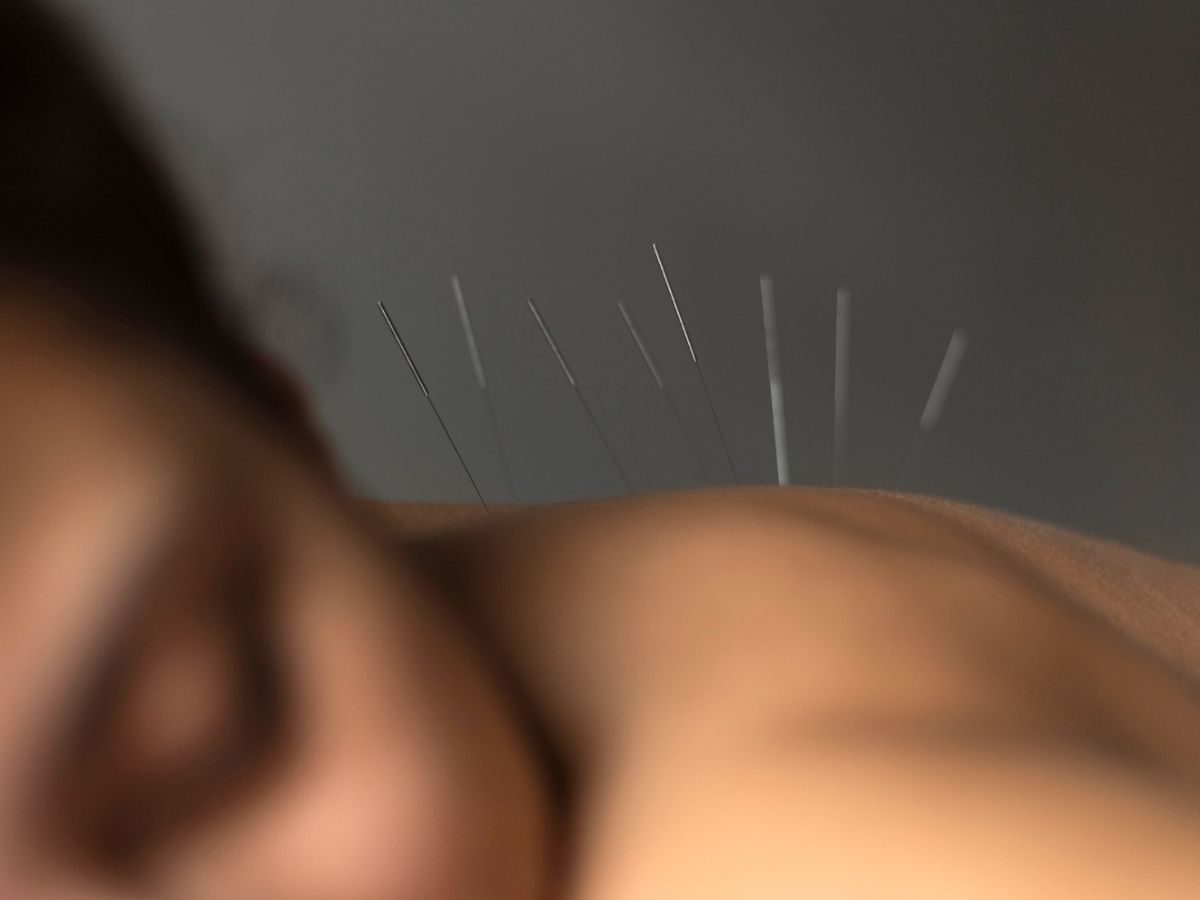
- Restores Balance: By placing ultra-thin needles at specific acupuncture points, we can stimulate and unblock your body’s meridians. This promotes the free and smooth flow of Qi and blood, helping to alleviate the pressure and stagnation that lead to migraine pain. Common points we use include Large Intestine 4 (LI4), located on the hand, to clear stagnation, and Gallbladder 20 (GB20), at the base of the skull, to relieve tension and pain.
- Calms the Nervous System: Acupuncture has a profound effect on the nervous system, helping to reduce the “fight or flight” response and encouraging deep relaxation. This can significantly reduce your sensitivity to external triggers, including changes in barometric pressure.
- Releases Natural Painkillers: Treatment stimulates the release of endorphins, your body’s own powerful, natural pain relievers. This offers a lasting alternative to relying on medication.
- Complements with Other Therapies: An effective acupuncture treatment often includes complementary techniques. Acupuncture is a powerful tool to increase circulation and release muscle tension, particularly in the neck and shoulders, which are common areas of stiffness during migraines. In some cases, a customized herbal medicine formula can also be prescribed to strengthen your body from within and prevent future episodes.
Your Personalized Treatment in Plano
As an acupuncturist, I take a comprehensive look at your health history, lifestyle, and unique migraine patterns. Do you feel the pressure behind your eyes? Is the pain on one side of your head? Do you get dizzy or nauseous? Your answers help me create a tailored treatment plan designed specifically to address your body’s unique needs. We don’t just treat the symptoms; we treat the person.
Practical Tips for Plano Residents
You don’t have to live at the mercy of the weather forecast. By taking a proactive approach, you can prepare your body to handle the fluctuations that are so common in North Texas.
- Keep a Migraine Journal: Track your headaches and note the date, time, and weather conditions. Apps can even track barometric pressure for you, which helps pinpoint your specific triggers.
- Stay Hydrated: Simple but crucial advice, especially in the Texas heat. Dehydration is a common migraine trigger.
- Manage Stress: Practice mindfulness or deep breathing exercises. A calm nervous system is less likely to overreact to external weather changes.
- Be Proactive with Diet: According to TCM, certain foods can contribute to “dampness.” Try reducing or limiting dairy, greasy foods, and sugar during times when a weather shift is predicted.
- Don’t Wait for the Pain: Consider a “proactive” acupuncture session when you know a major weather change is on its way. Preparing your body beforehand can often prevent a migraine from even starting.
Don’t let the next storm front ruin your plans. If you’re ready to find lasting relief and take control of your health, I invite you to learn more about how a personalized acupuncture plan can help you manage your weather-related migraines.
Pursuing Your Health is Our Passion
Call or Text 972-777-0836
We'll be happy to answer your questions.
Is Acupuncture Effective for Migraines?
Yes. Acupuncture is very effective for Migraines. The treatments focused on reducing inflammation and swelling. Acupuncture has been shown in many studies to be incredibly practical in reducing pain and inflammation due to its ability to stimulate the body to release its natural painkillers. So, you start feeling relieved from the pain after each session.
When Should I start Acupuncture?
As a general rule of thumb, the sooner one receives treatment, the better the prognosis. Some patients come for migraine treatment months or even years after the initial onset, and these chronic cases are often more complex and take a much longer time to achieve results. Even then, recovery is not guaranteed.
How Often Should I Schedule Acupuncture Sessions?
Regarding the frequency of treatments, Acupuncture follows a simple rule. Acute and relatively new conditions are most effectively treated with more frequent visits, whereas chronic and old conditions can benefit from more widespread treatments. In other words, if you just had an onset of migraines, you will probably be prescribed 2-3 treatments per week in order to get the most effective results, and chronic cases will generally come in only once a week.
If you or a loved one was diagnosed with migraines and headaches and wants to learn more about acupuncture and whether it’s appropriate for your case, send us a message through our contact page. Thank you for taking the time to read this blog post! I appreciate your interest and hope to see you again for future posts.
We understand this can be a lot of information and overwhelming: if you are looking for more support and answers, set up a free consultation with our migraine Specialist, Satoru Ozawa. Share your story, get your questions answered, and learn how you can set yourself up for tremendous success in achieving a healthy life.
RECENT ARTICLES
These blogs are about natural remedies, acupuncture, Chinese medicine, Chinese herbs, and health tips.

When a Storm is Brewing: A Plano Resident’s Guide to Barometric Pressure Migraines
Living in Plano, you know the weather changes. Sudden storms and fronts cause barometric pressure migraines. Get help for the...
Read More
Satoru Ozawa, L.Ac, ATC
hariQ acupuncture & herbs
Licensed acupuncturist, Certified Athletic Trainer and Chinese herbal specialist. With his 10 years of experience in Oriental Medicine, he will recommend the best natural Remedies, including Acupuncture, Chinese herbs, and health tips to relieve your suffering.