
I'd like to show you how you can use acupressure—a powerful technique from Traditional Oriental Medicine—to find relief from your...
Read More
Menu
Treat Your Migraine: 10 Acupressure Points By Yourself

January 12, 2026
Headache
10 Acupressure Points to Relieve Migraines at Home
Hi, it’s Satoru from hariQ acupuncture & herbs in Plano, TX. Living with migraines can be incredibly challenging, but what if you had a simple, drug-free tool to help manage them right at your fingertips? In this blog post, I’d like to show you how you can use acupressure—a powerful technique from Traditional Oriental Medicine—to find relief from your migraine symptoms.
We understand this can be a lot of information and overwhelming: if you are looking for more support and answers, set up a free consultation with our migraine Specialist, Satoru Ozawa. Share your story, get your questions answered, and learn how you can set yourself up for tremendous success in achieving a healthy life.
What is Migraine?

A migraine is more than just a bad headache. It’s often a severe, throbbing headache that typically affects one side of the head, and it can be accompanied by other symptoms like sensitivity to light and sound, nausea, and even an aura. While the exact cause of migraines isn’t fully understood, they are frequently triggered by factors like stress, hormonal changes, and weather fluctuations.
The Neck-Migraine Connection: Understanding a Common Trigger
Many people who experience migraines also report neck pain or tension. This isn’t a coincidence. While the exact relationship is complex, here are a few ways that tension in the neck can contribute to migraine symptoms:
- Muscle Tension: The muscles at the base of the skull and in the upper neck (like the suboccipital muscles) can become tight due to stress, poor posture, or physical strain. This tension can irritate nerves in the area, such as the greater and lesser occipital nerves, which travel up into the scalp. This irritation can trigger or worsen headache and migraine pain.
- Nerve Irritation: The nerves that originate in the upper neck are directly connected to the brainstem. Irritation or inflammation in this area can make the brain more sensitive to pain signals, lowering the threshold for a migraine attack.
Acupressure: Your At-Home Tool for Relief
Acupressure uses the same points as acupuncture, but instead of needles, you use your fingers or thumbs to apply firm but gentle pressure. This stimulation can help to ease muscle tension, improve local blood flow, and calm the nervous system, all of which can provide significant relief from migraine symptoms.
While acupressure can’t cure a migraine, it can be a valuable tool for managing symptoms and providing some much-needed relief during an attack. I’m going to share 10 of the most effective acupressure points that you can easily use at home.
When applying pressure to these points, use a firm but comfortable force. You can massage the area in a circular motion or apply steady pressure for about 30 seconds to a minute on each point. You can repeat this several times as needed.
The 10 Acupressure Points for Migraine Relief
For each point, you’ll want to use firm, steady pressure. You can press, massage in a circular motion, or use a combination of both. Breathe deeply and try to relax as you work on each point. You can hold each point for 1-2 minutes, or until you feel a release or sense of relief.
Here are 10 acupressure points to help you find relief:
1. UB2 (Urinary Bladder 2)

Location: In the small indentation just below the inner end of your eyebrow, near the bridge of your nose.
How to Use: Using both index fingers, apply gentle pressure to both points simultaneously. This is a classic point for relieving headaches, eye strain, and sinus pain often associated with migraines.
2. Yu Yao

Location: In the center of the eyebrow, directly above the pupil.
How to Use: Use your thumbs or index fingers to apply pressure to both points at the same time. This point is excellent for headaches, especially those focused in the forehead and temples, and for relieving eye fatigue.
3. Tai Yang
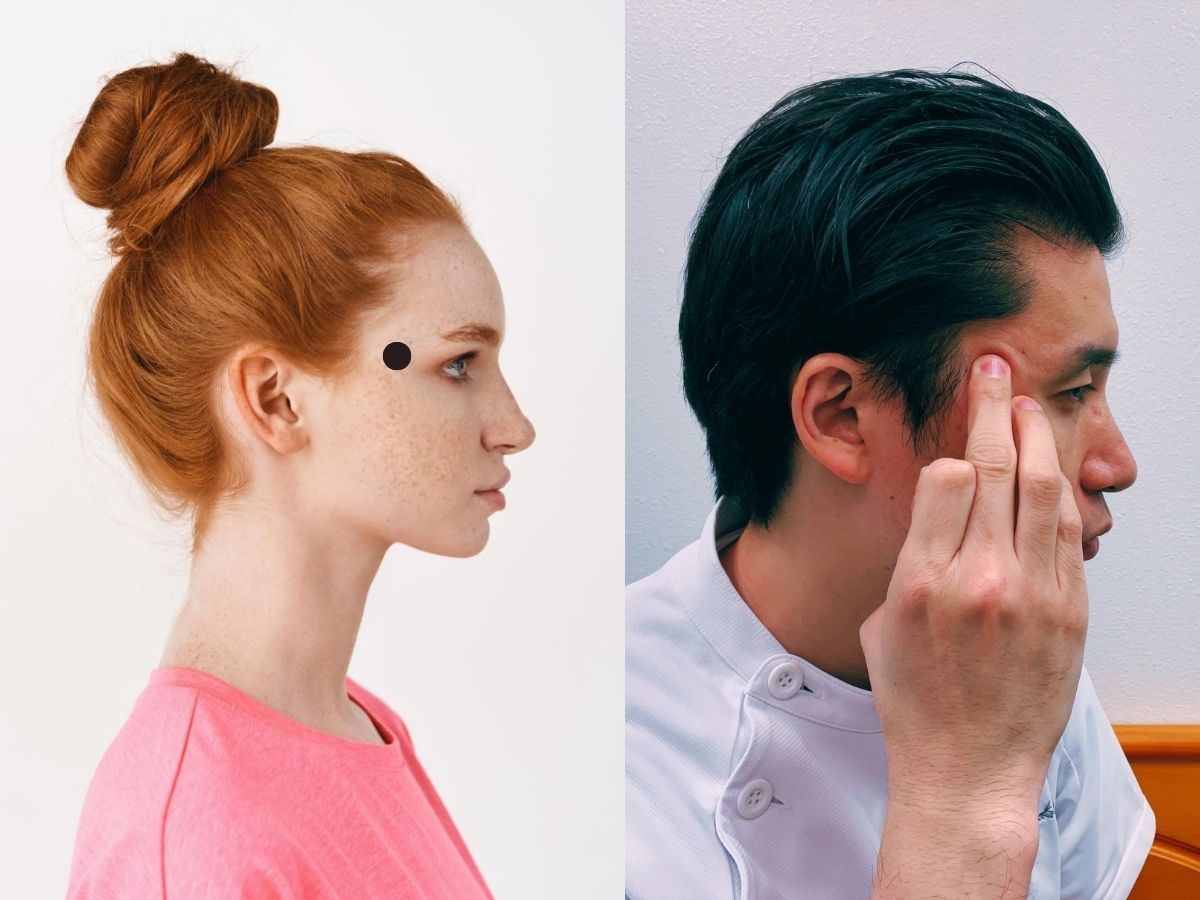
Location: In the temple, about one finger-breadth behind the midpoint between the end of the eyebrow and the outer corner of the eye.
How to Use: Using your index fingers or thumbs, apply gentle but firm pressure on both sides. This is a well-known point for relieving temporal headaches and is often used by people instinctively when they have a headache.
4. GB8 (Gallbladder 8)
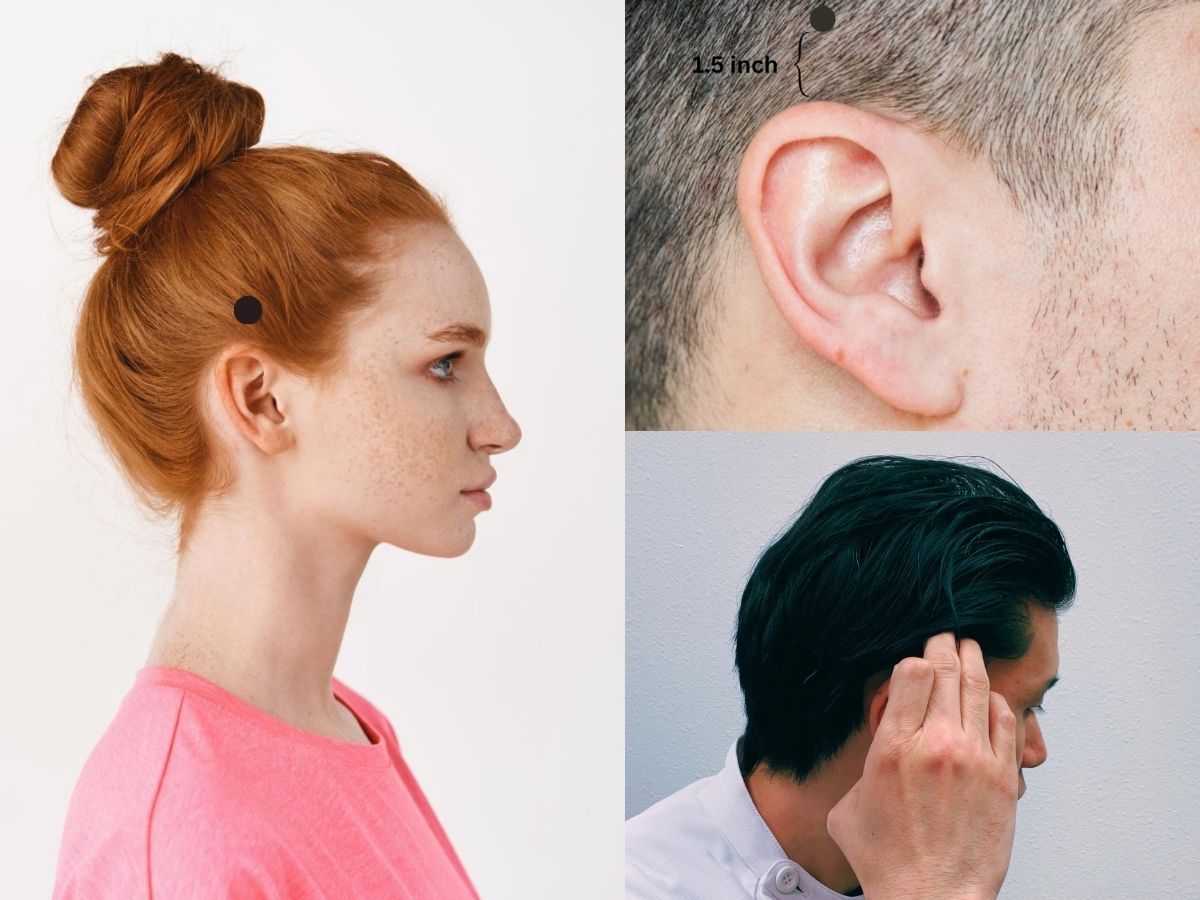
Location: Above the ear, about two finger-breadths directly above the apex of the ear.
How to Use: Using your fingertips, apply pressure in a circular motion on both sides. This point is effective for temporal headaches and can help with dizziness and a feeling of “fogginess” that can accompany migraines.
5. ST8 (Stomach 8)
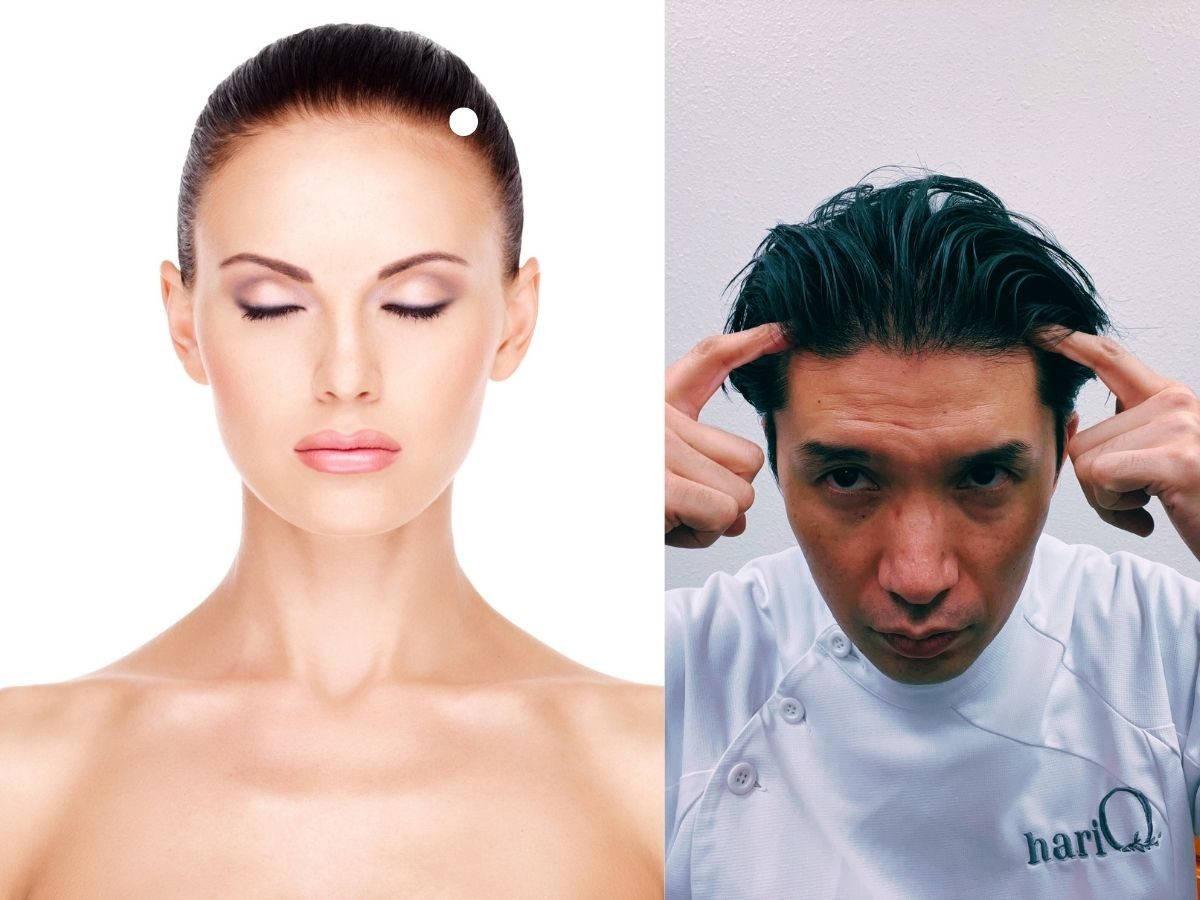
Location: Located on the forehead at the corner of the hairline, about four and a half finger-widths from the midline.
How to Use: Use your fingertips to apply firm pressure to this point on both sides of your head. It’s excellent for soothing frontal and temporal headache pain.
6. GB15 (Gall Bladder 15)
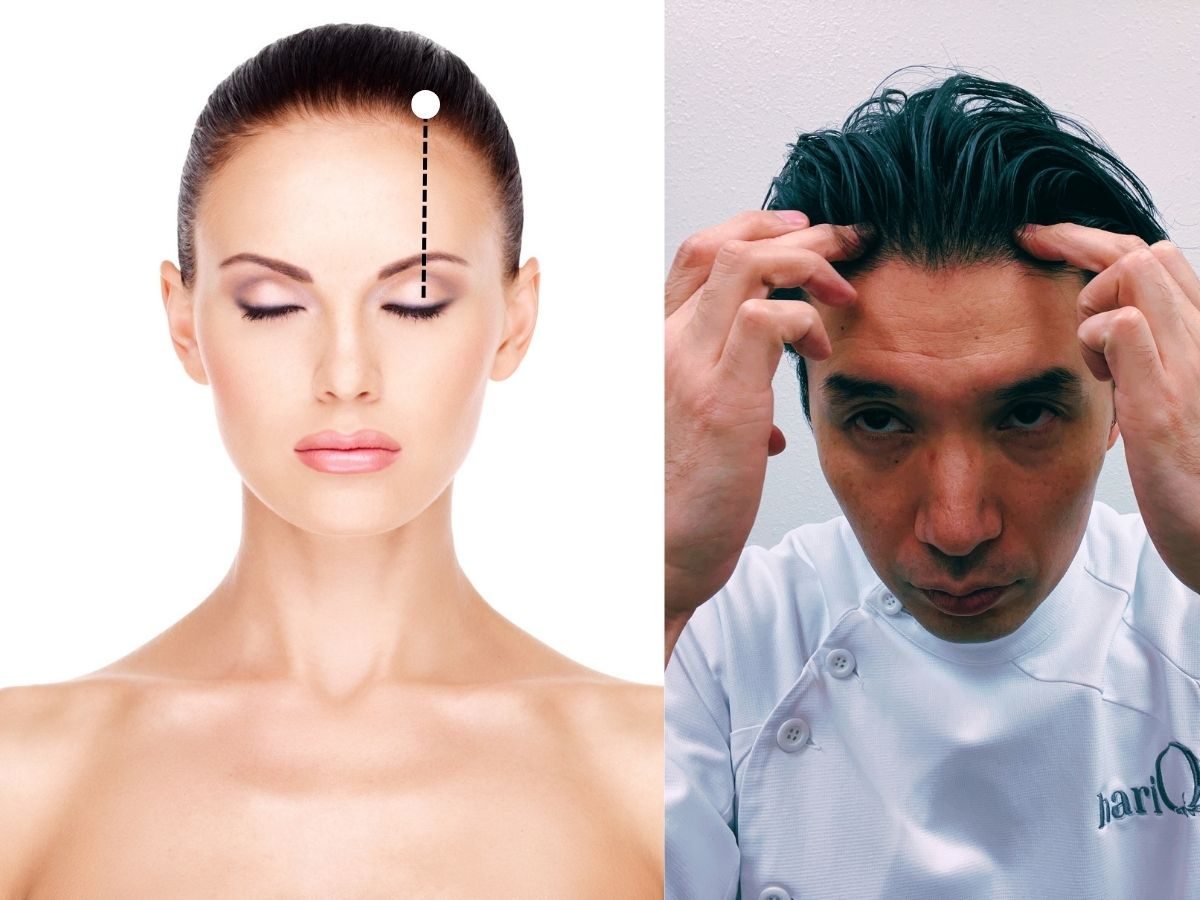
- Location: A finger-width above the midpoint of your eyebrow, directly above the pupil.
How to Use: Effective for headaches on the forehead and side of the head, particularly those with a feeling of heaviness or pressure.
7. GB12 (Gallbladder 12)
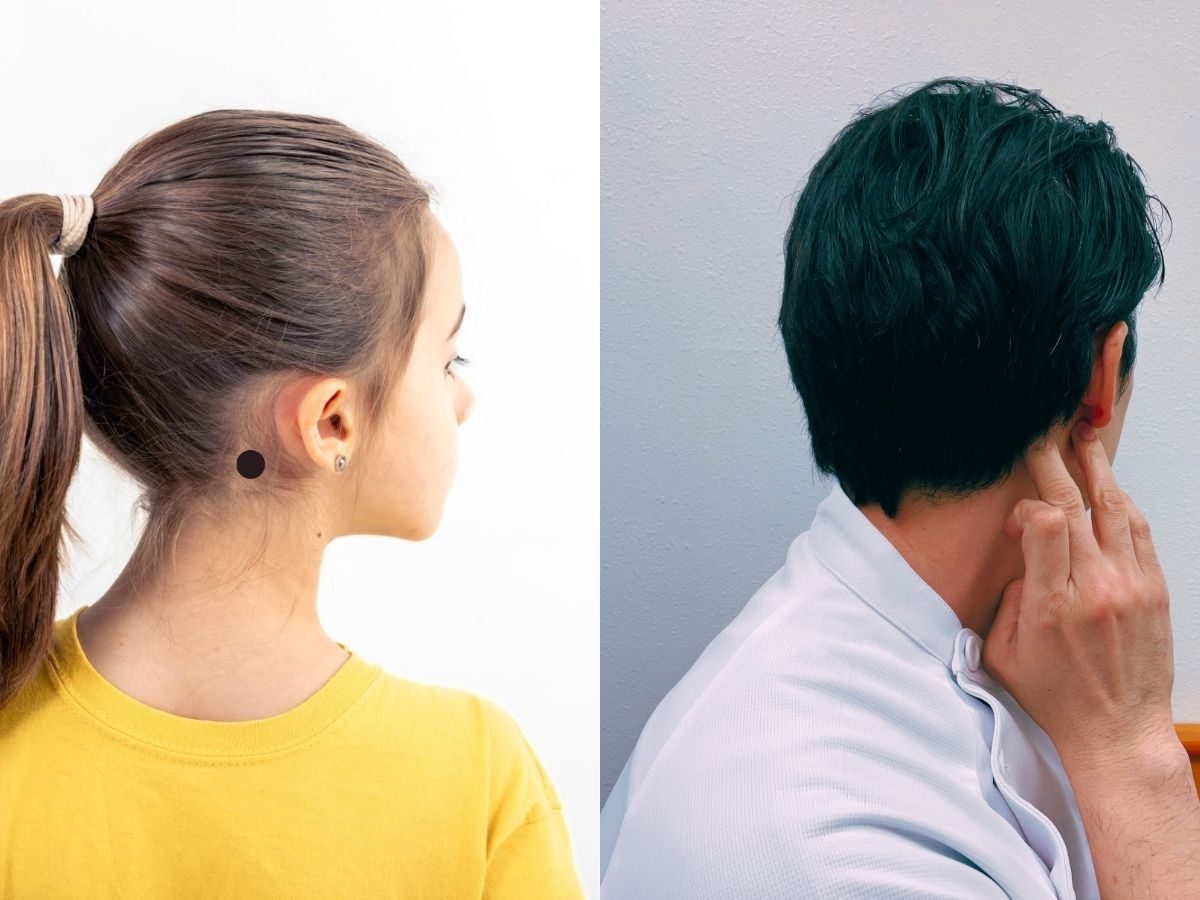
Location: At the base of the skull, just behind the mastoid process (the bony prominence behind your ear) in a small hollow.
How to Use: Use your thumbs to press upwards and slightly inwards towards the center of your head. This point is great for tension headaches and neck stiffness that can contribute to migraines.
8. UB10 (Urinary Bladder 10)
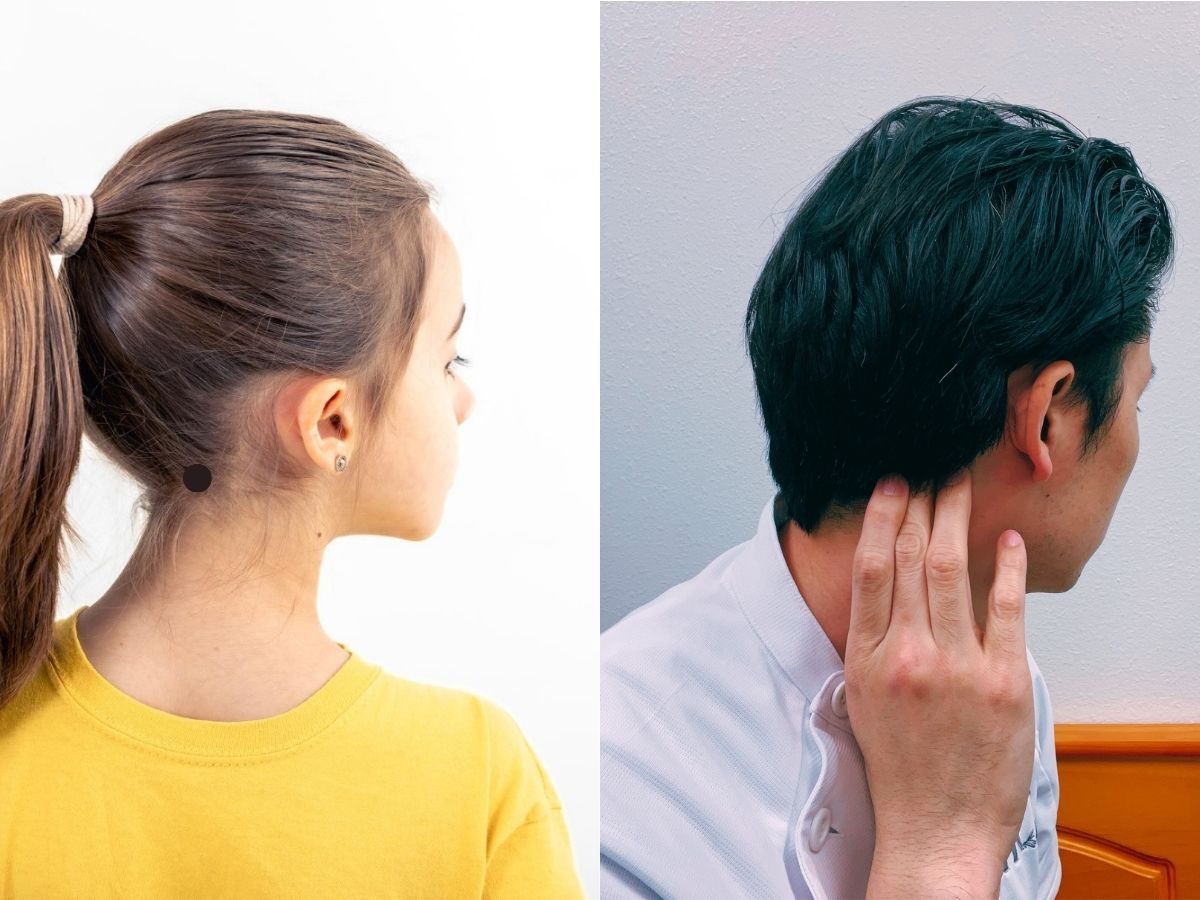
Location: On the back of the neck, about one finger-width below the base of the skull, in the hollow on either side of the trapezius muscle.
How to Use: Use your thumbs to apply firm pressure, massaging upwards towards the base of the skull. This is a powerful point for relieving neck pain and headaches, especially those that radiate from the back of the head.
9. LI4 (Large Intestine 4)
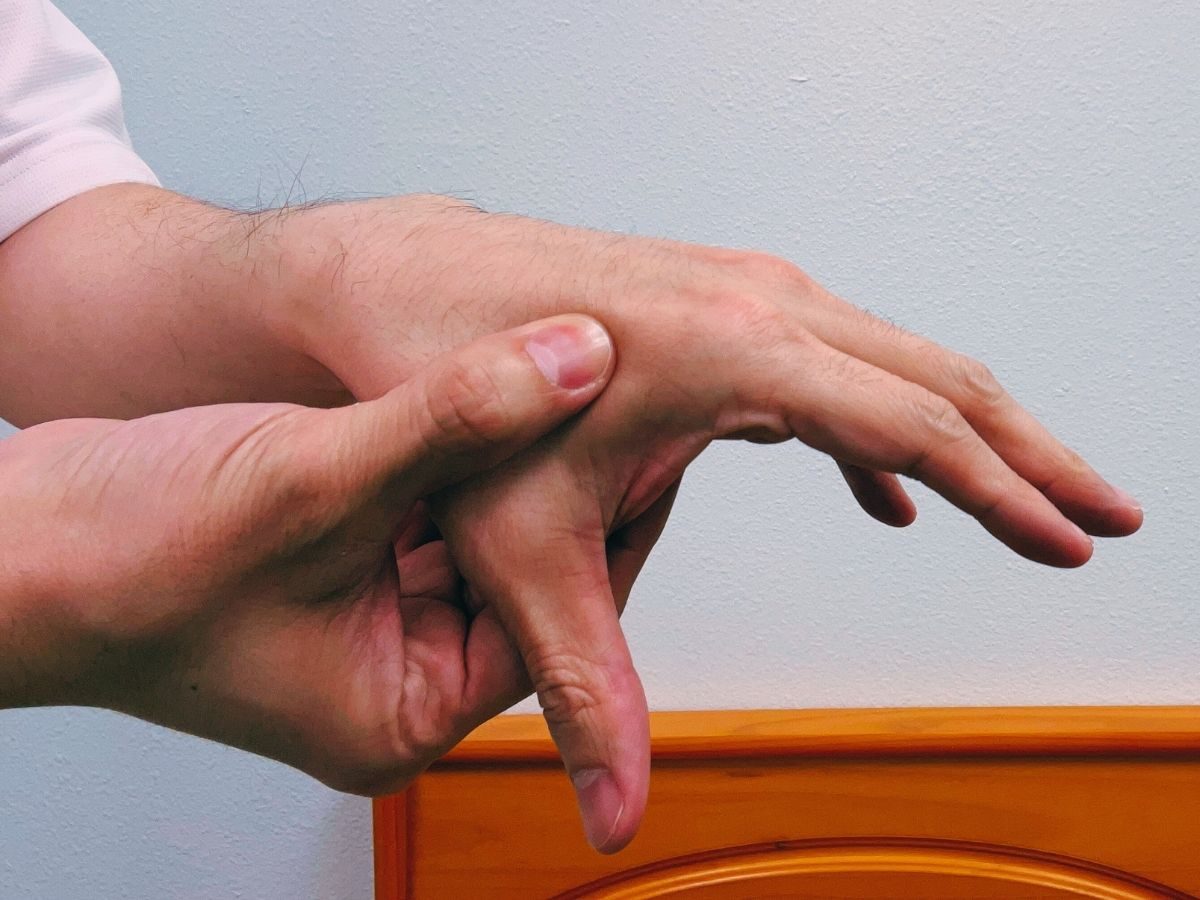
Location: On the back of the hand, in the web between the thumb and index finger.
How to Use: Squeeze the fleshy mound between the bones of the thumb and index finger of your other hand. Apply firm pressure and massage. Do not use this point if you are pregnant. This is a very common and effective point for general pain relief, including headaches and body aches.
10. "The Tenderness Test" (ST43, LV3, GB41, or GB42)
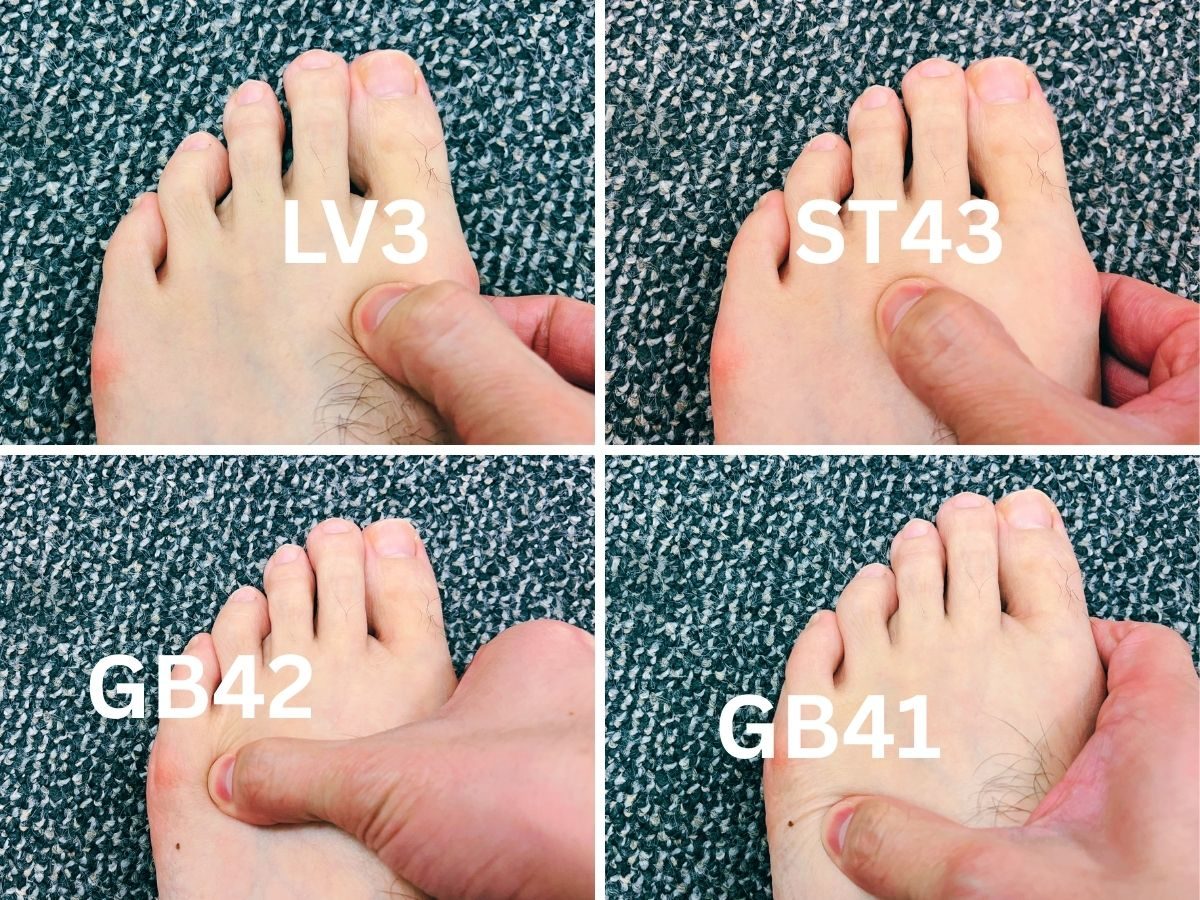
Location: These points are all on the feet.
ST43 (Stomach 43): On the top of the foot, in the depression between the 2nd and 3rd metatarsal bones.
LV3 (Liver 3): On the top of the foot, in the depression between the 1st and 2nd metatarsal bones.
GB41 (Gallbladder 41): On the top of the foot, in the depression between the 4th and 5th metatarsal bones.
GB42 (Gallbladder 42): On the top of the foot, in the depression between the 4th and 5th metatarsal bones, closer to the toes.
How to Use: Satoru’s Tip: Use your fingers to press along the top of your foot from your ankle towards your toes. You’ll likely find one of these points is the most tender. This “most tender” point is the one you want to focus on. Apply firm pressure and massage it for a minute or two. This technique is a great way to personalize your treatment and find the point that your body needs most in that moment.
Important Note
While acupressure can be a powerful tool, it’s not a substitute for professional medical advice. If your migraines are severe or getting worse, please consult with your healthcare provider. We can create a personalized treatment plan to address the root cause of your migraines and help you find long-lasting relief.
Pursuing Your Health is Our Passion
Call or Text 972-777-0836
We'll be happy to answer your questions.
Is Acupuncture Effective for Migraines?
Yes. Acupuncture is very effective for migraines. The treatments focused on reducing inflammation and pain and releave the tension in your head and neck. Acupuncture has been shown in many studies to be incredibly practical in reducing pain and inflammation due to its ability to stimulate the body to release its natural painkillers. So, you start feeling relieved from the pain after each session.
When Should I start Acupuncture?
As a general rule of thumb, the sooner one receives treatment, the better the prognosis. Some patients come for migraine treatment months or even years after the initial onset, and these chronic cases are often more complex and take a much longer time to achieve results. Even then, recovery is not guaranteed.
How Often Should I Schedule Acupuncture Sessions?
Regarding the frequency of treatments, Acupuncture follows a simple rule. Acute and relatively new conditions are most effectively treated with more frequent visits, whereas chronic and old conditions can benefit from more widespread treatments. In other words, if you just had an onset of migraines, you will probably be prescribed 2-3 treatments per week in order to get the most effective results, and chronic cases will generally come in only once a week.
I hope this guide helps you feel more empowered to manage your migraines. Remember, taking a few moments for yourself can make a world of difference. Feel free to reach out if you have any questions or would like to schedule an appointment to discuss a personalized treatment plan. Thank you for taking the time to read this blog post! I appreciate your interest and hope to see you again for future posts.
We understand this can be a lot of information and overwhelming: if you are looking for more support and answers, set up a free consultation with our acupuncturist, Satoru Ozawa. Share your story, get your questions answered, and learn how you can set yourself up for tremendous success in achieving a healthy life.
RECENT ARTICLES
These blogs are about natural remedies, acupuncture, Chinese medicine, Chinese herbs, and health tips.
When a Storm is Brewing: A Plano Resident’s Guide to Barometric Pressure Migraines
Living in Plano, you know the weather changes. Sudden storms and fronts cause barometric pressure migraines. Get help for the...
Read More
Satoru Ozawa, L.Ac, ATC
hariQ acupuncture & herbs
Licensed acupuncturist, Certified Athletic Trainer and Chinese herbal specialist. With his 10 years of experience in Oriental Medicine, he will recommend the best natural Remedies, including Acupuncture, Chinese herbs, and health tips to relieve your suffering.