
I'd like to show you how you can use acupressure—a powerful technique from Traditional Oriental Medicine—to find relief from your...
Read More
Menu
Honoring a Mentor: The Last Dance

January 13, 2026
Acu-Zone Therapy Seminar, Acupuncture
Honoring a Mentor: The Last Dance
Hi, it’s Satoru from hariQ acupuncture & herbs. As a practitioner, my focus is always on giving you the best tips and treatments for better health. But today, I want to share a personal story—one that is at the very heart of my passion and the work I do.
I recently returned from a meaningful trip to Japan to attend my mentor’s final seminar. It had been quite a while since I’d attended one of his workshops, especially in our home country; I’d usually fly to the U.S. ones. This time, however, was different. It was his last, not by choice, but due to his health. Despite this, he was determined to hold one more to pass on his techniques and passion to the next generation of acupuncturists.
As soon as I heard he was holding it, I texted him immediately, saying, “Sensei, I’m coming to help you.” Later, his top apprentice told me how happy and thrilled he was that I came all the way from the U.S. for it. Hearing that was a great honor, and I was so glad I made the trip. The two-day seminar in Kanagawa was an incredibly powerful experience. My mentor, who I have always looked up to, poured every bit of his knowledge, experience, and passion into teaching us.

We understand this can be a lot of information and overwhelming: if you are looking for more support and answers, set up a free consultation with our licensed acupuncturist, Satoru Ozawa. Share your story, get your questions answered, and learn how you can set yourself up for tremendous success in achieving a healthy life.
My Deepening Understanding: The Acu-Zone Technique

The seminar focused on Acu-zone therapy, a specialized technique that I use in my clinic right here in Plano, TX. Acu-zone therapy is rooted in the principle of treating a patient’s entire system rather than just isolated symptoms. This involves using very subtle, gentle needling to stimulate specific “zones” on the body, which then influence and harmonize a patient’s energy, or Qi, to promote natural healing. This approach requires a profound level of sensitivity and palpation, something my mentor has mastered over decades.
The energy and passion in the room were palpable. Practitioners and students from all over Japan filled the seminar hall, all eager to absorb every word and movement from our sensei. I think the energy and drive to learn in Japan felt even stronger than what I had experienced at his U.S. seminars. It was truly inspiring to be surrounded by so many people dedicated to the art of this medicine.
Even though I went primarily to help him, I learned more than I could have imagined. In my practice, I focus on the treatment itself, intuitively treating patients to make them feel better. I’d never had to verbalize the process in a formal way before. Teaching forced me to articulate the nuances of the technique, and in doing so, my own understanding deepened significantly.
Acupuncture is a very difficult modality because its effectiveness often relies heavily on feeling. That feeling is the touch of your hands and fingers, your palpation, and every practitioner has a different feeling. During the seminar, one attendee explained that they felt something “gummy,” while another described a different sensation entirely. I wasn’t sure if we were all feeling the same thing, or if their feelings were the same as my own. However, when I tried to explain what I was feeling and how it guided my treatment, my understanding of the entire process went even deeper. I was able to articulate my perceptions and, by doing so, could more accurately compare them with my fellow senseis, creating a new level of collaborative learning.
The Power of Professional Connection
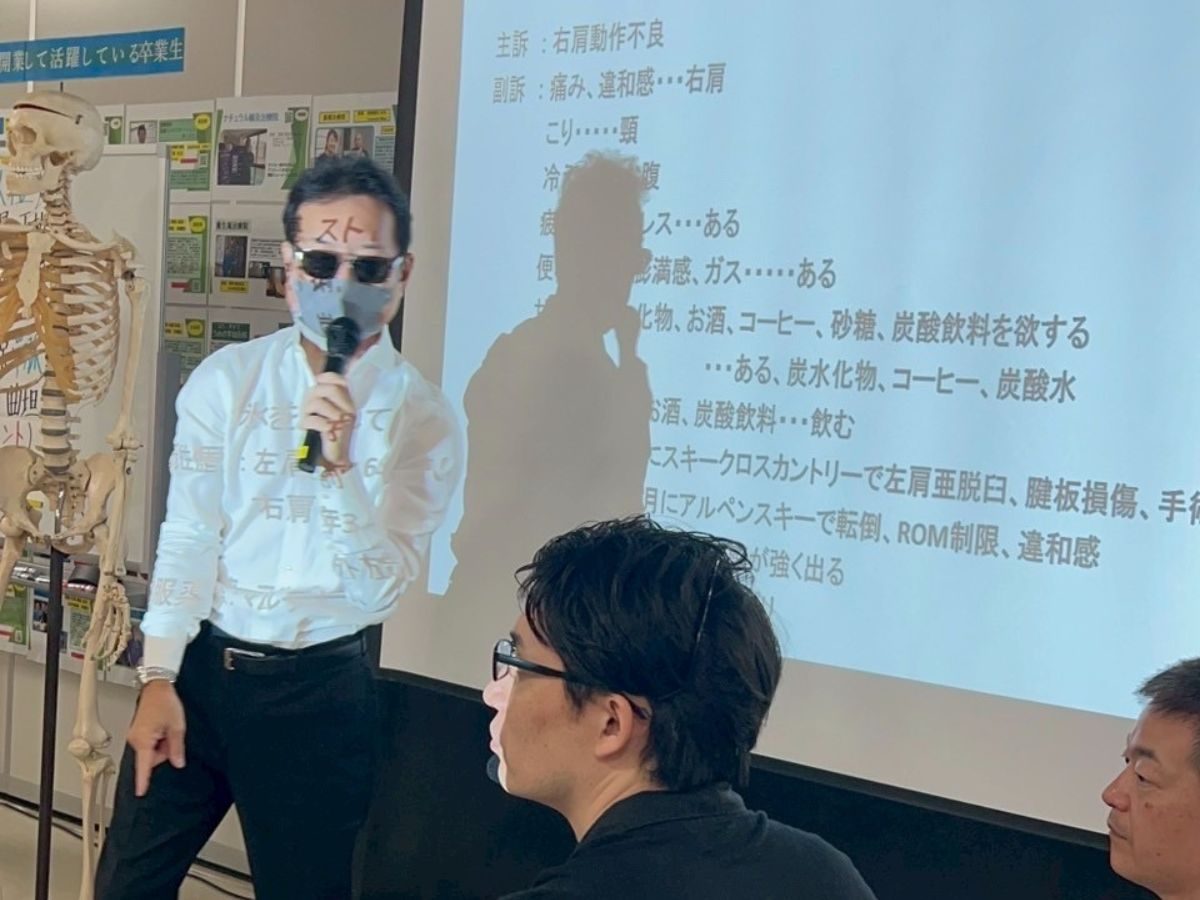
Through this seminar, I also learned how vital the connection with other practitioners is. After I left my previous clinic to start hariQ acupuncture & herbs, I spent a lot of time working alone to refine my skills and build my experience. This solo time was invaluable, as it allowed me to think deeply about how to improve my patients’ health without being influenced by others.
However, the seminar showed me the flip side of that isolation. Sharing information and ideas with other practitioners can teach you so much. It exposes you to different ways of thinking and treating patients, all influenced by their own unique backgrounds and experiences.
A perfect example of this came up when we were discussing how a patient’s lifestyle and environment impact their health. I’m in Plano, Texas, where the vast majority of my patients are Americans. Their diet and lifestyle are quite different from the Japanese. For instance, in my previous clinic in New Mexico, I saw many patients who had their gallbladders removed. I knew that green chile was a staple in their diet, and its spiciness could be a contributing factor. I asked my fellow senseis in Japan if they also saw a high number of patients with this issue, and their answer was no. They seldom see people who have had their gallbladders removed. If I hadn’t gone to that seminar and connected with them, I would never have been able to confirm my suspicions and gain that deeper insight into how regional diets can impact a patient’s health.
A Lesson in Passion
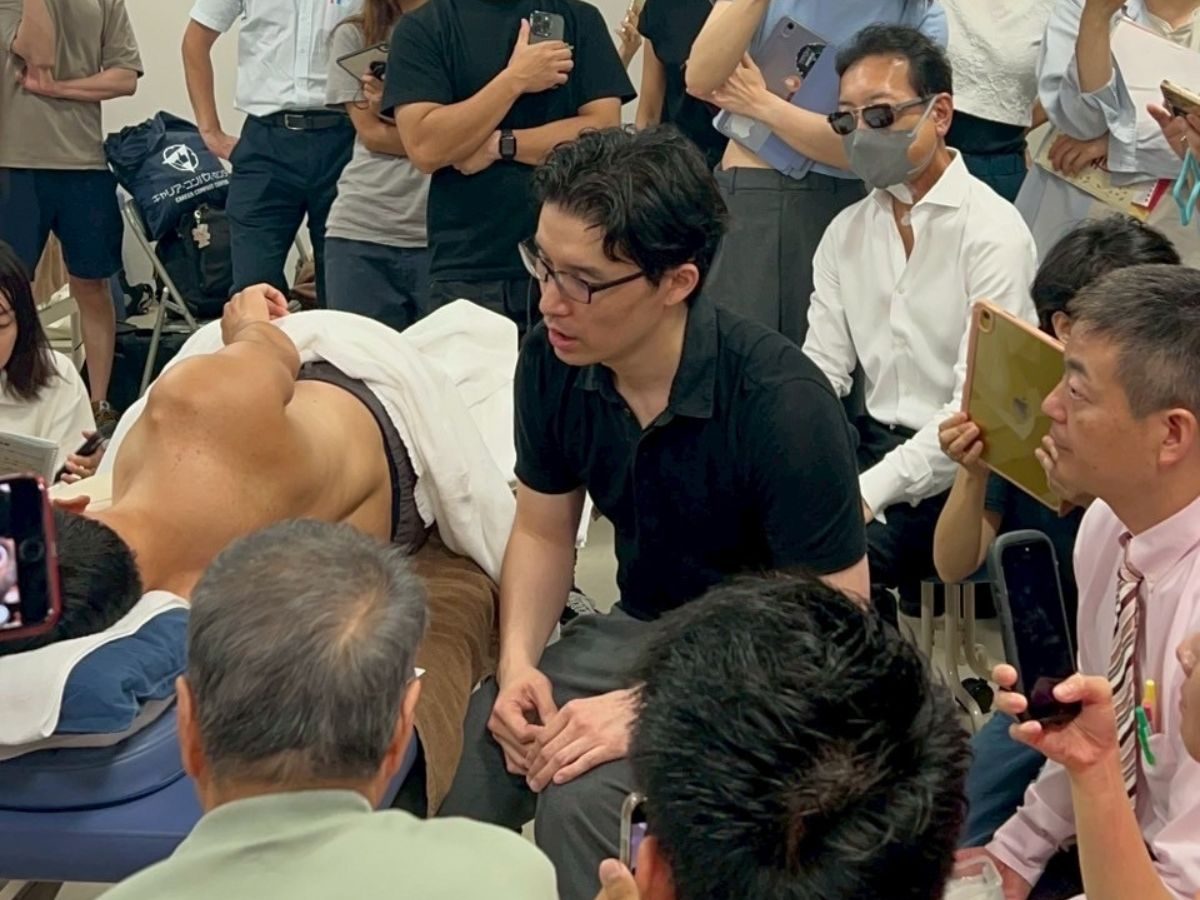
My mentor’s final lesson was perhaps the most profound. He was so passionate about teaching the younger generation everything he knew. He told us that he has no regrets because he always did what he wanted. “Life is short,” he said. “If you don’t live your life to the fullest, you should. You never know when your time is up. But if you live without regret, you will be satisfied with your life and can go to heaven.” From him, I learned how truly precious and fleeting life is.
This message resonates deeply with me. It’s not just about a passion for acupuncture, but a passion for living with purpose and without hesitation. That is a philosophy I strive to bring to my practice every day—not just in my treatments but in the way I connect with my patients and approach my life.
A Deep Appreciation

Lastly, I want to express my gratitude. To my mentor, thank you for everything you taught me. Because of you, I am who I am today, and I can continue to pursue my passion with purpose and confidence. I will never forget your wisdom and your spirit. I don’t think I’ll ever reach your level, but I will spend the rest of my career trying to get as close as I possibly can.
This seminar was not just a professional learning experience; it was a personal journey that reaffirmed my purpose. I am excited to bring this renewed passion and deeper understanding back to my practice and to all of you, my valued patients.
I hope this personal story gave you a unique look into the heart of my practice and what drives me. If you have any questions about Acu-zone therapy or my journey, feel free to ask in the comments below!
Pursuing Your Health is Our Passion
Call or Text 972-777-0836
We'll be happy to answer your questions.
What is Acu-Zone Therapy?
Acu-zone Therapy is a unique, palpation-based Japanese acupuncture method founded by Dr. Nakano, a renowned acupuncturist in New Mexico.
What makes it so distinct is its highly sensitive diagnostic approach. Rather than relying solely on a patient’s verbal description of symptoms, practitioners use palpation—the art of using touch to feel for imbalances in the body. This allows them to precisely locate and identify areas of concern.
Once a diagnosis is made, the treatment is remarkably minimalist. Acu-zone Therapy utilizes a maximum of seven very fine needles, which are placed with extreme precision. The approach is designed to be gentle, yet the results are often quite powerful and effective for a range of conditions, including lower back pain, Bell’s palsy, trigger finger, neuropathy, frozen shoulder, neck pain, trigeminal neuralgia, migraines & gynecological issues.
When Should I start Acupuncture?
As a general rule of thumb, the sooner one receives treatment, the better the prognosis. Some patients come for treatment months or even years after the initial onset, and these chronic cases are often more complex and take a much longer time to achieve results. Even then, recovery is not guaranteed.
How Often Should I Schedule Acupuncture Sessions?
Regarding the frequency of treatments, Acupuncture follows a simple rule. Acute and relatively new conditions are most effectively treated with more frequent visits, whereas chronic and old conditions can benefit from more widespread treatments. In other words, if you just had the onset of any disease, you would probably be prescribed 2-3 treatments per week in order to get the most effective results, and chronic cases will generally come in only once a week.
If you or a loved one wants to learn more about acupuncture and whether it’s appropriate for your case, send us a message through our contact page. Thank you for taking the time to read this blog post! I appreciate your interest and hope to see you again for future posts.
We understand this can be a lot of information and overwhelming: if you are looking for more support and answers, set up a free consultation with our licensed acupuncturist, Satoru Ozawa. Share your story, get your questions answered, and learn how you can set yourself up for tremendous success in achieving a healthy life.
RECENT ARTICLES
These blogs are about natural remedies, acupuncture, Chinese medicine, Chinese herbs, and health tips.
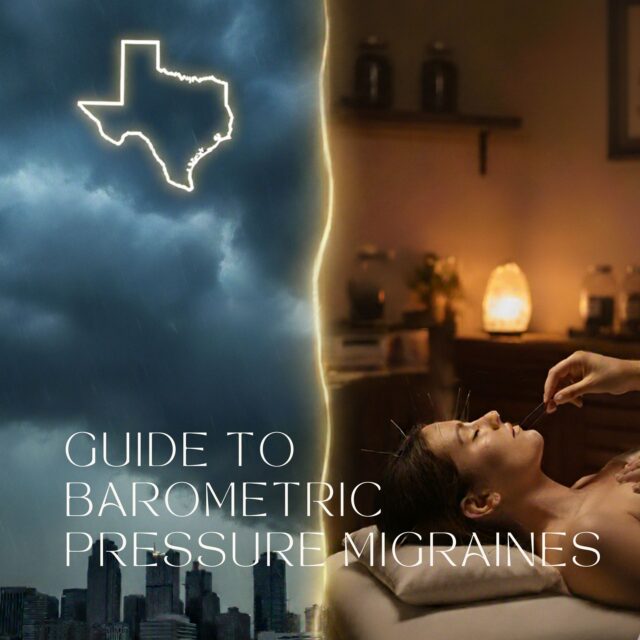
When a Storm is Brewing: A Plano Resident’s Guide to Barometric Pressure Migraines
Living in Plano, you know the weather changes. Sudden storms and fronts cause barometric pressure migraines. Get help for the...
Read More
Satoru Ozawa, L.Ac, ATC
hariQ acupuncture & herbs
Licensed acupuncturist, Certified Athletic Trainer and Chinese herbal specialist. With his 10 years of experience in Oriental Medicine, he will recommend the best natural Remedies, including Acupuncture, Chinese herbs, and health tips to relieve your suffering.